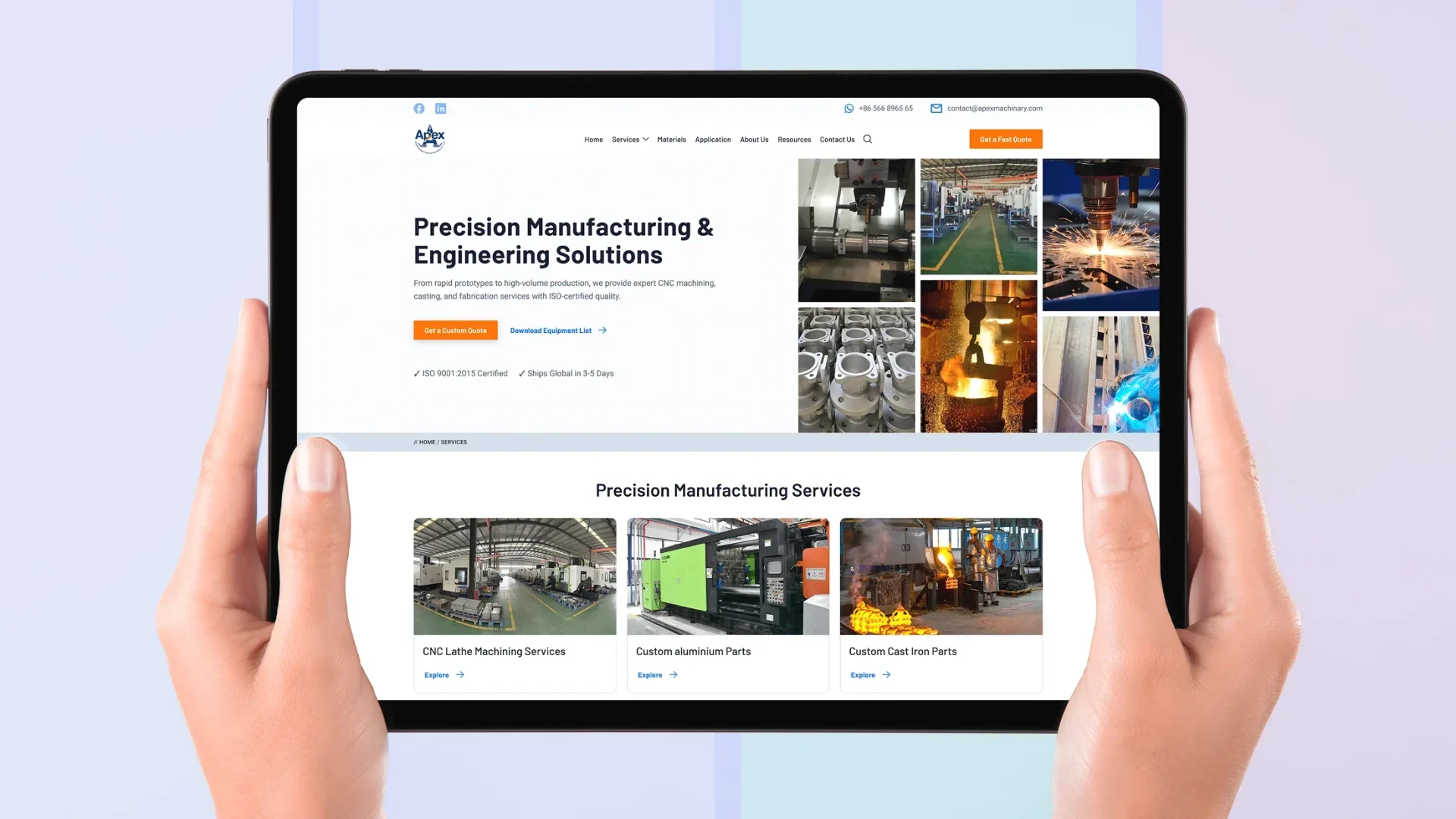
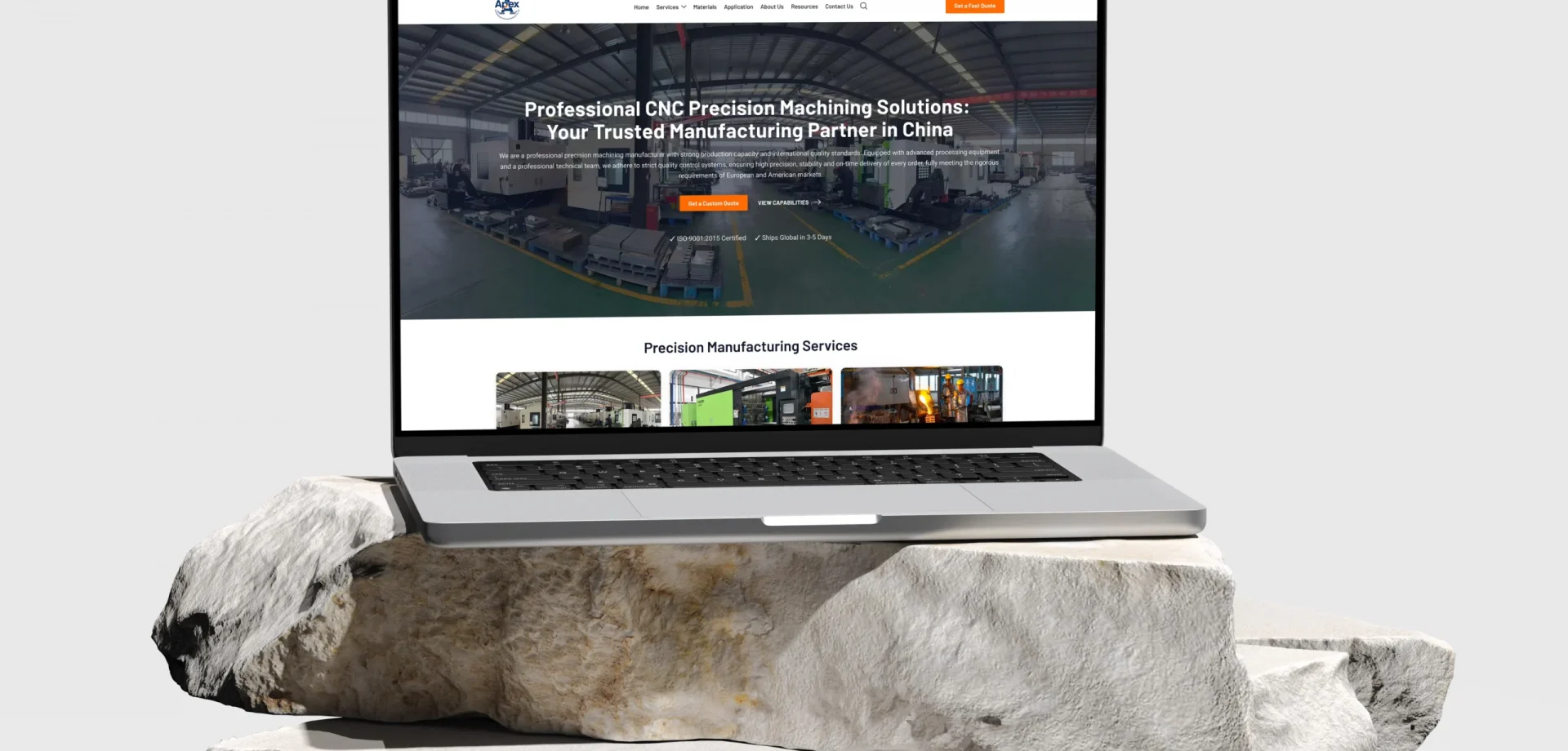
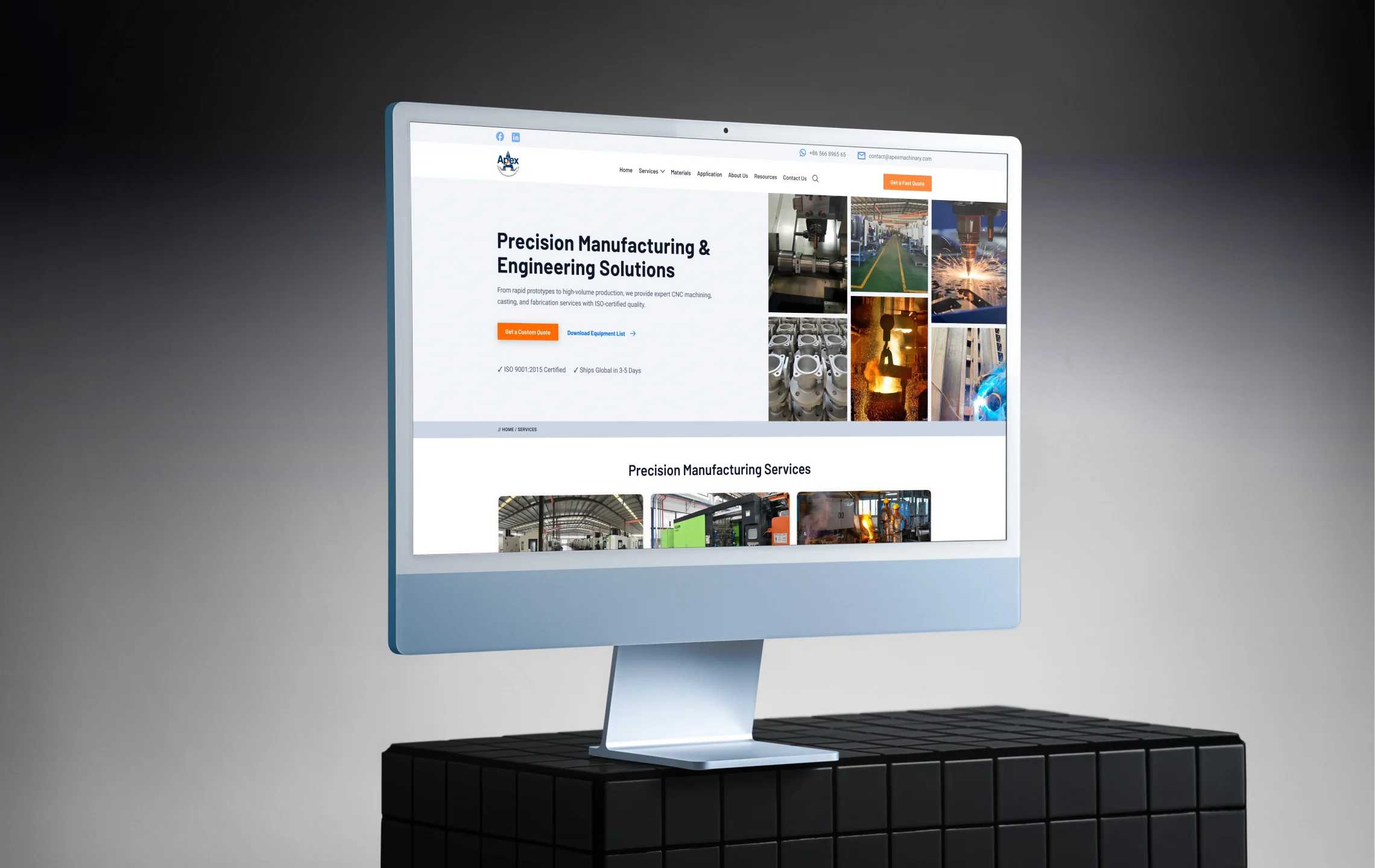
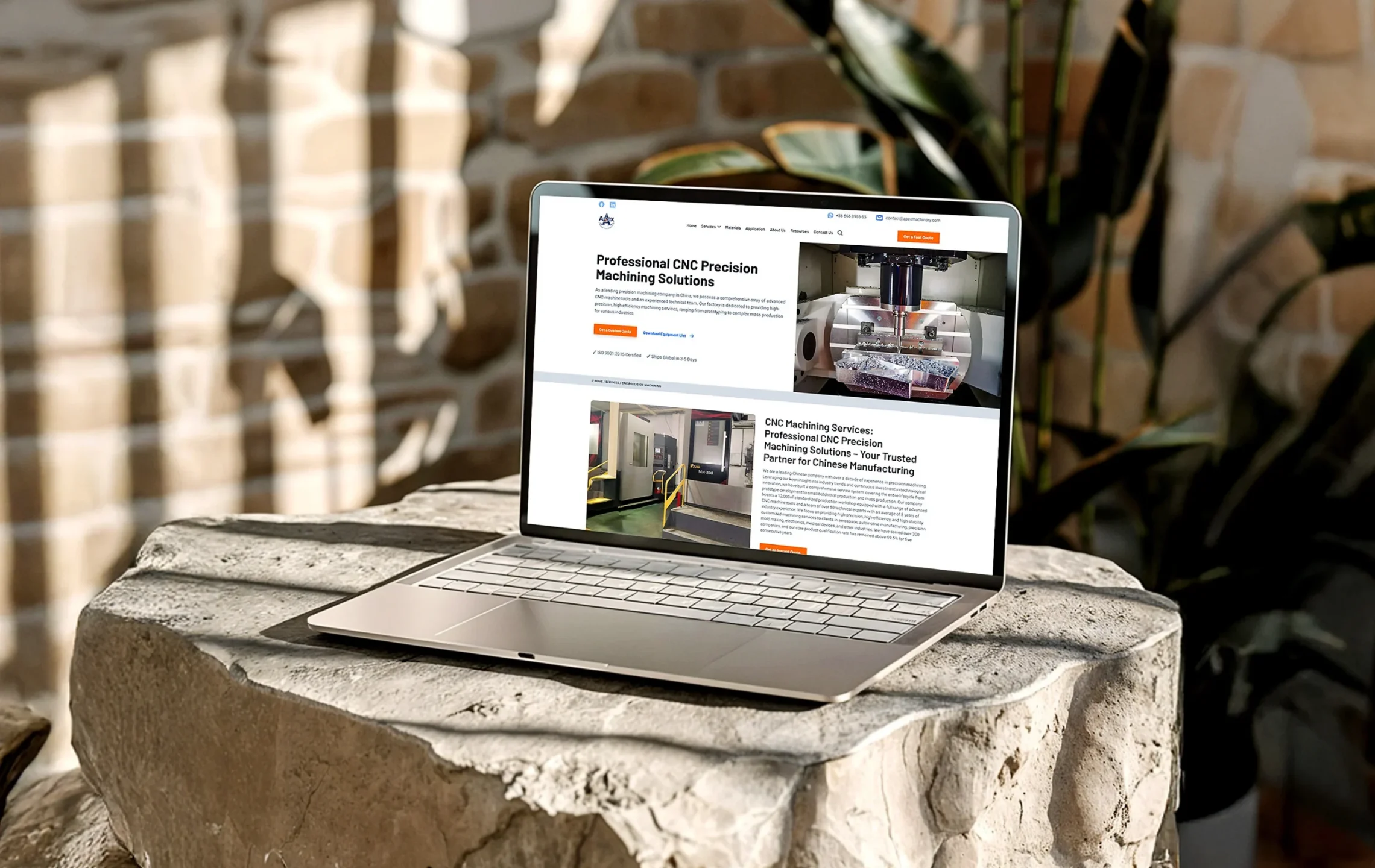
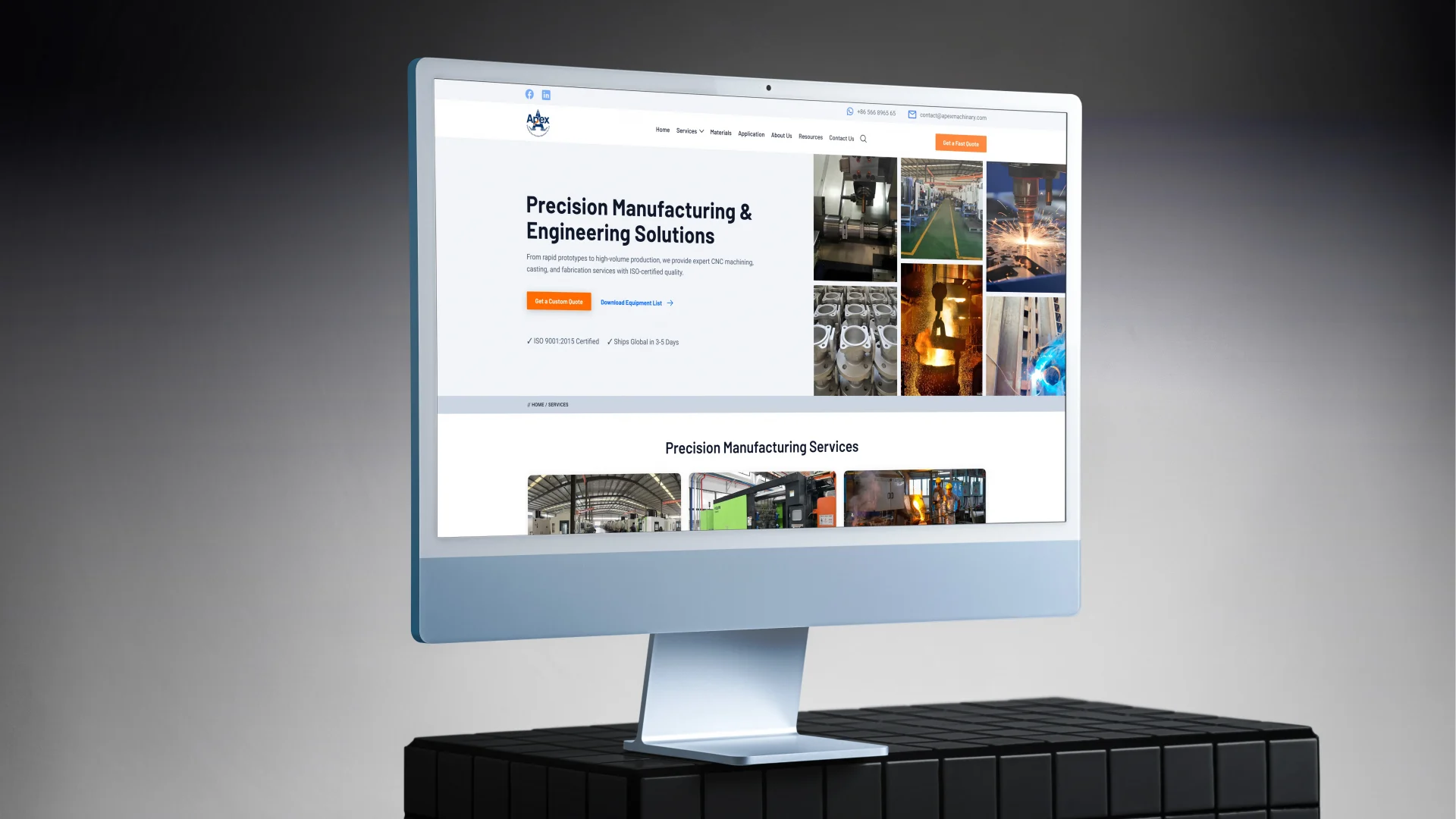
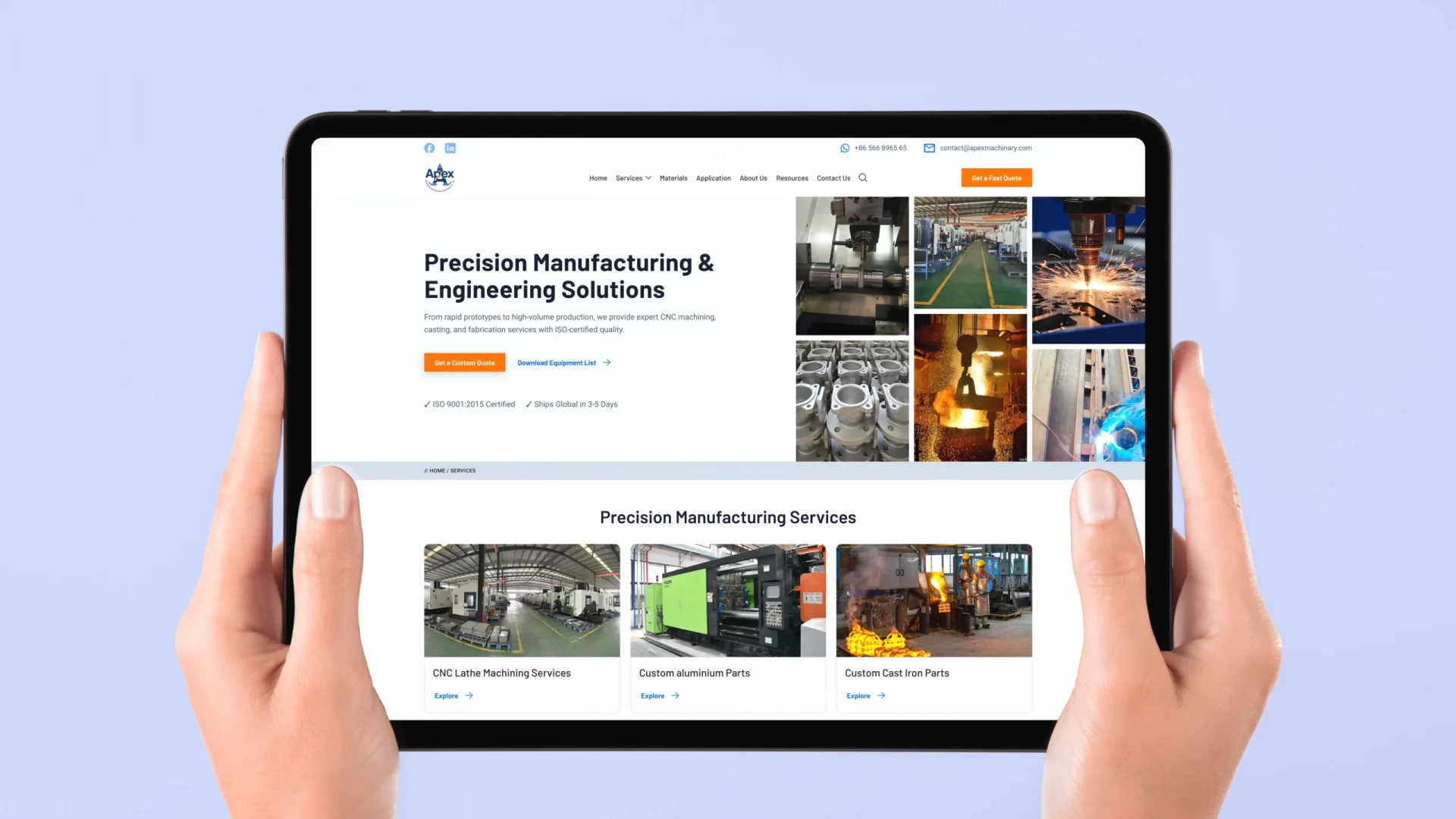
Apex Precision Parts is a leading manufacturer specializing in high-tolerance component transformation and assembly for the Aerospace, Medical, and Precision Equipment sectors. The goal of this project was to transition their digital presence from a traditional “machine shop” feel to a high-tech, innovation-driven platform. We redesigned the interface of the CNC Machining Website to reflect their 99% accuracy rate, emphasizing their “Zero-Failure” mission through a clean, industrial-grade UX that speaks directly to OEM engineers and procurement officers.
The Challenge
The primary challenge was translating complex technical capabilities—ranging from 5-axis CNC milling to Exotic Material Machining—into a digestible, high-converting browsing experience for technical buyers.
For Aerospace and Medical clients, "good enough" isn't an option; the UI lacked the high-end precision feel that matches their actual facility standards.
Technical leads often have specific material or tolerance requirements, but the old site lacked a structured path to capture these high-intent details.
The Solutions
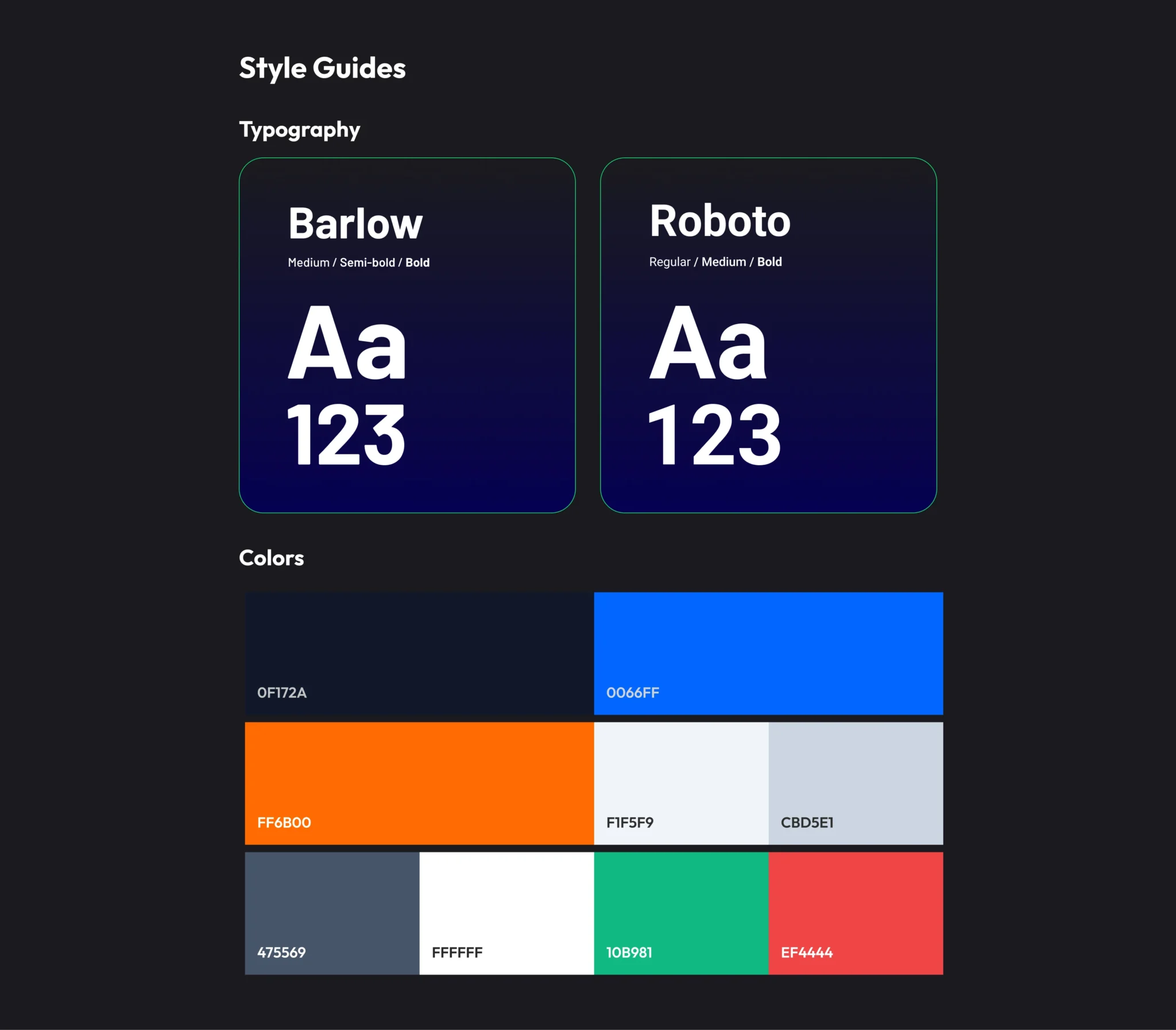
We implemented a "Precision-First" design system that uses structured data and visual hierarchy to mirror the accuracy of the parts they produce.
The UX architecture followed a "Z-pattern" for the homepage to lead users from the value proposition (Accuracy) to the proof (Case Studies) and finally the action (RFQ). The UI design utilized a modular grid system, mimicking the organized layout of a modern CNC facility, ensuring that even data-heavy tables remain mobile-responsive and legible.
Workflow Scenario
User Path: The Aerospace Procurement Officer
Entry
Lands on the "Aerospace Assemblies" page via search.
Interaction
Uses the "Materials We Work With" filter to confirm Apex handles Inconel 718.
Validation
Scrolls to the integrated "Case Study" section to see a previous project involving turbine components.
Conversion
Clicks the persistent "Request a Quote" button, uploads a STEP file, and submits the lead within 90 seconds.
Results
Since the launch, the project has achieved the following strategic design outcomes:
+145%
Increase in Organic Search Traffic
42%
Reduction in Page Load Speed
+60%
Growth in Qualified Monthly RFQs
Optimized Information Architecture
Reduced the average "Time-to-Spec" (the time it takes a user to find specific material capabilities) by approximately 50%.
Enhanced Brand Authority
Successfully repositioned the company as a Tier-1 Aerospace supplier through a unified, high-fidelity design language.
Improved Lead Quality
By implementing a structured RFQ form, the internal sales team now receives 100% of the necessary technical data (material, quantity, files) in the initial contact.
Scalable Infrastructure
Established a modular WordPress design system that allows the client to add new machinery and service lines without breaking the layout.